Gracias, ciencia!
Ya no me sentiré tan frustrado cuando difieren conmigo.
Study: Teenage brain lacks empathy
Area of brain associated with higher-level thinking underused in youths
If you ever sense teenagers are not taking your feelings into account, it's probably because they're just incapable of doing so.
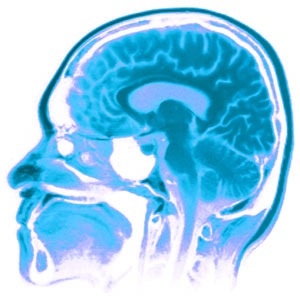 The area of the brain associated with higher-level thinking, empathy, and guilt is underused by teenagers, reports a new study. When considering an action, the teenage medial prefrontal cortex, located in front of the brain, doesn't get as much action as adults.
"Thinking strategies change with age," said Sarah-Jayne Blakemore of the University College London Institute of Cognitive Neuroscience. "As you get older you use more or less the same brain network to make decisions about your actions as you did when you were a teenager, but the crucial difference is that the distribution of that brain activity shifts from the back of the brain (when you are a teenager) to the front (when you are an adult)."
Teen thinking
In the study, teens and adults were asked how they would react to certain situations. As they responded, researchers imaged their brains.
Although both adults and teens responded similarly to the questions, their brain activity differed. The medial prefrontal cortex was much more active in the adults than in the teens. However, the teenagers had much more activity in the superior temporal sulcus, the brain area involved in predicting future actions based on previous ones.
Adults were also much faster at figuring out how their actions would affect themselves and other people.
"We think that a teenager's judgment of what they would do in a given situation is driven by the simple question: 'What would I do?'" Blakemore said. "Adults, on the other hand, ask: 'What would I do, given how I would feel and given how the people around me would feel as a result of my actions?'"
Developing sensitivity
Children start taking into account other people's feelings around the age of five. But the ability develops well beyond this age, the new research suggests.
And while some of this sensitivity could be the result of undeveloped regions in the brain, the experience that adults acquire from social interactions also plays an important role.
"Whatever the reasons, it is clear that teenagers are dealing with, not only massive hormonal shifts, but also substantial neural changes," Blakemore said. "These changes do not happen gradually and steadily between the ages of 0–18. They come on in great spurts and puberty is one of the most dramatic developmental stages."
The results of the study were presented today at the BA Festival of Science in the UK.
http://www.msnbc.msn.com/id/14738243/?GT1=8506
Study: Teenage brain lacks empathy
Area of brain associated with higher-level thinking underused in youths
If you ever sense teenagers are not taking your feelings into account, it's probably because they're just incapable of doing so.
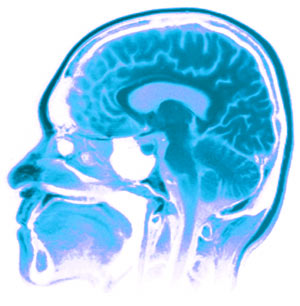 The area of the brain associated with higher-level thinking, empathy, and guilt is underused by teenagers, reports a new study. When considering an action, the teenage medial prefrontal cortex, located in front of the brain, doesn't get as much action as adults.
"Thinking strategies change with age," said Sarah-Jayne Blakemore of the University College London Institute of Cognitive Neuroscience. "As you get older you use more or less the same brain network to make decisions about your actions as you did when you were a teenager, but the crucial difference is that the distribution of that brain activity shifts from the back of the brain (when you are a teenager) to the front (when you are an adult)."
Teen thinking
In the study, teens and adults were asked how they would react to certain situations. As they responded, researchers imaged their brains.
Although both adults and teens responded similarly to the questions, their brain activity differed. The medial prefrontal cortex was much more active in the adults than in the teens. However, the teenagers had much more activity in the superior temporal sulcus, the brain area involved in predicting future actions based on previous ones.
Adults were also much faster at figuring out how their actions would affect themselves and other people.
"We think that a teenager's judgment of what they would do in a given situation is driven by the simple question: 'What would I do?'" Blakemore said. "Adults, on the other hand, ask: 'What would I do, given how I would feel and given how the people around me would feel as a result of my actions?'"
Developing sensitivity
Children start taking into account other people's feelings around the age of five. But the ability develops well beyond this age, the new research suggests.
And while some of this sensitivity could be the result of undeveloped regions in the brain, the experience that adults acquire from social interactions also plays an important role.
"Whatever the reasons, it is clear that teenagers are dealing with, not only massive hormonal shifts, but also substantial neural changes," Blakemore said. "These changes do not happen gradually and steadily between the ages of 0–18. They come on in great spurts and puberty is one of the most dramatic developmental stages."
The results of the study were presented today at the BA Festival of Science in the UK.
http://www.msnbc.msn.com/id/14738243/?GT1=8506
posted by paco at 7:21 PM


5 Comments:
ke onda pakillo jajajajaja...
otro de tus tantos post cientificos... jajajajajajaja.. suelen ser interesantes... jajajajaja pero pues ni k ehacerle la vdd que yo no se que pedo....
pero esta bien eso del cerebro.. jajaja explicaciones.. aunke ke tiene de difernete la caracterisica de la pare de atars a la de adelnate acaso la de atras no tiene sentimeintos o porke chingados...
independienteente de eso esta bien :D..
jajajajaja se cuida pakillo nos vemos en la night ahi en el alebiches.. y pues.. chido :D
Volvimos a ganar!!!! 5-1 :D... a serguir con el paso de invictos ;)
bueno chaoooo
simplemente
amo tu forma de escribir
lo que pusiste hoy no es tuyo, pero todo lo demás sí
te amo
soy usuaria anónima
que te quede claro
;)
Gracias por el cumplido usuaria anónima.
=)
Ah, las anónimas... ideas perdidas, variables incomprendidas y misteriosas.
Si relaciono el artículo con mi vida, podría decir que en mi caso ha sido cierto. Sí, antes era un friolento cabrón hijo de la chingada que no se preocupaba por lo que sintiera el otro, la otra. Otredad.
Lo interesante reside en si deberíamos empezar a preocuparnos por la otredad. Tal vez, sólo tal vez, luego de estar tanto tiempo solos con nosotros mismos nos damos cuenta que no nos toleramos, de allí salimos corriendo de nuestra consciencia para aburrinos en común.
Sólo tal vez. O ese escape será quizá un suspiro de rendición que dice: "¡Ah, qué va, al carajo!"
Post a Comment
<< Home